Role
Duration
Year
Location
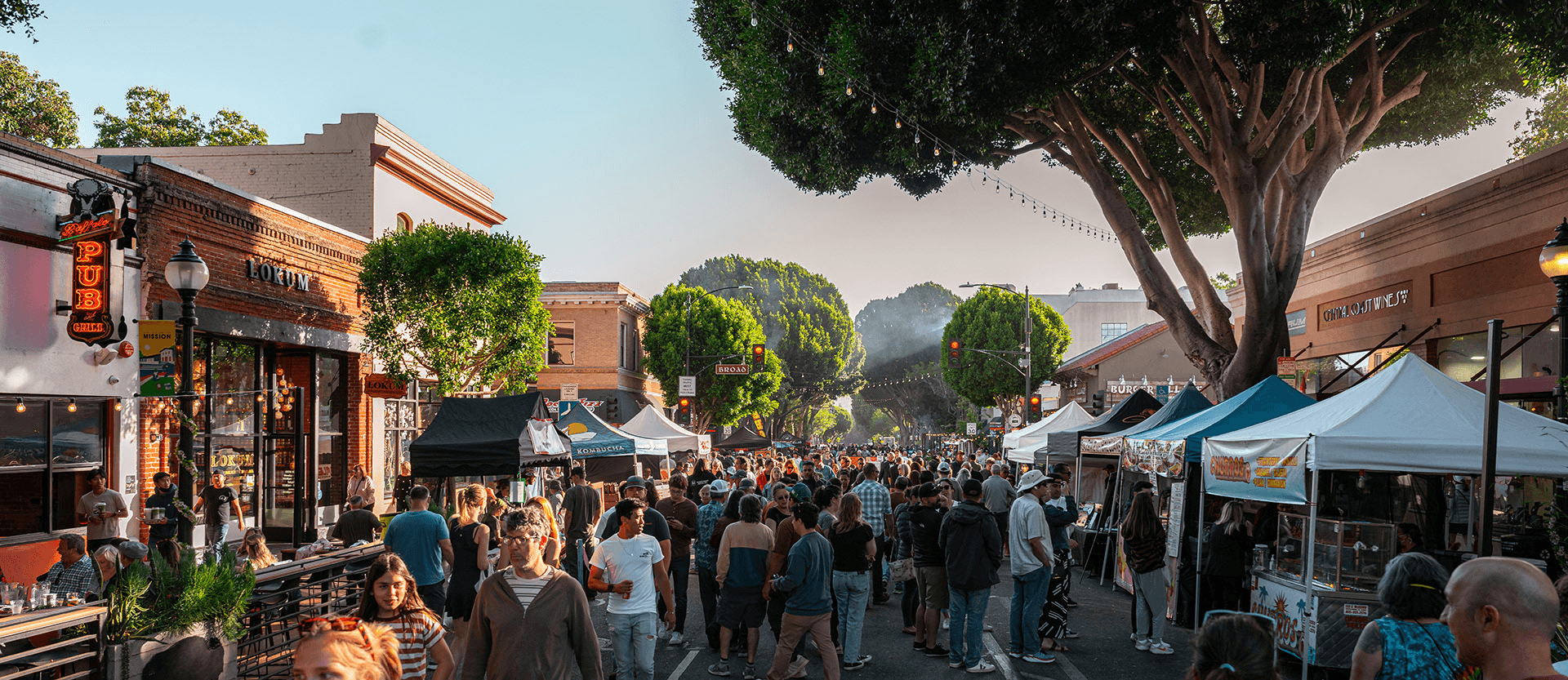
The SLO Farmers' Market lacked a standalone website with a cohesive brand identity. Working within a team, I led user research that uncovered a core usability issue: visitors had to navigate multiple clicks just to find critical information like vendor details, weekly events, parking, and weather updates. From there, I developed personas, user flows, and information architecture before designing low-fidelity wireframes in Figma.
1. Problem & How Might We Statement
The San Luis Obispo Farmers’ Market currently lacks a standalone website with a cohesive brand identity. Users cannot easily access essential/time-sensitive information. The existing site requires multiple clicks in order for users to access critical details regarding joining, vendors, weekly events, parking, weather updates, and more.
How might we reduce the number of clicks for Farmers’ Market attendees so that critical details such as weekly events, weather updates, and vendor information can be easily accessed on a standalone website with consistent brand identity?
Visiting the Current Site
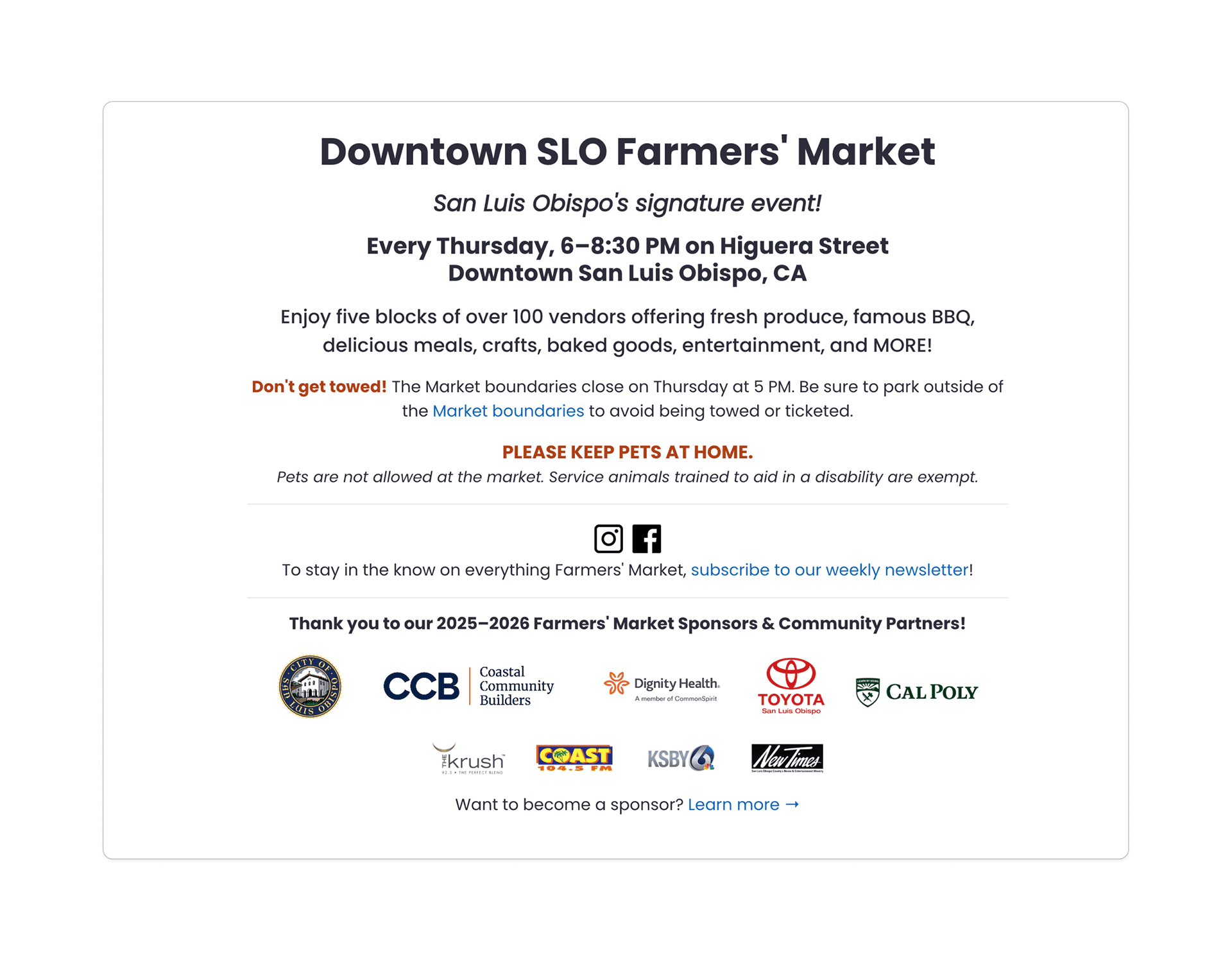
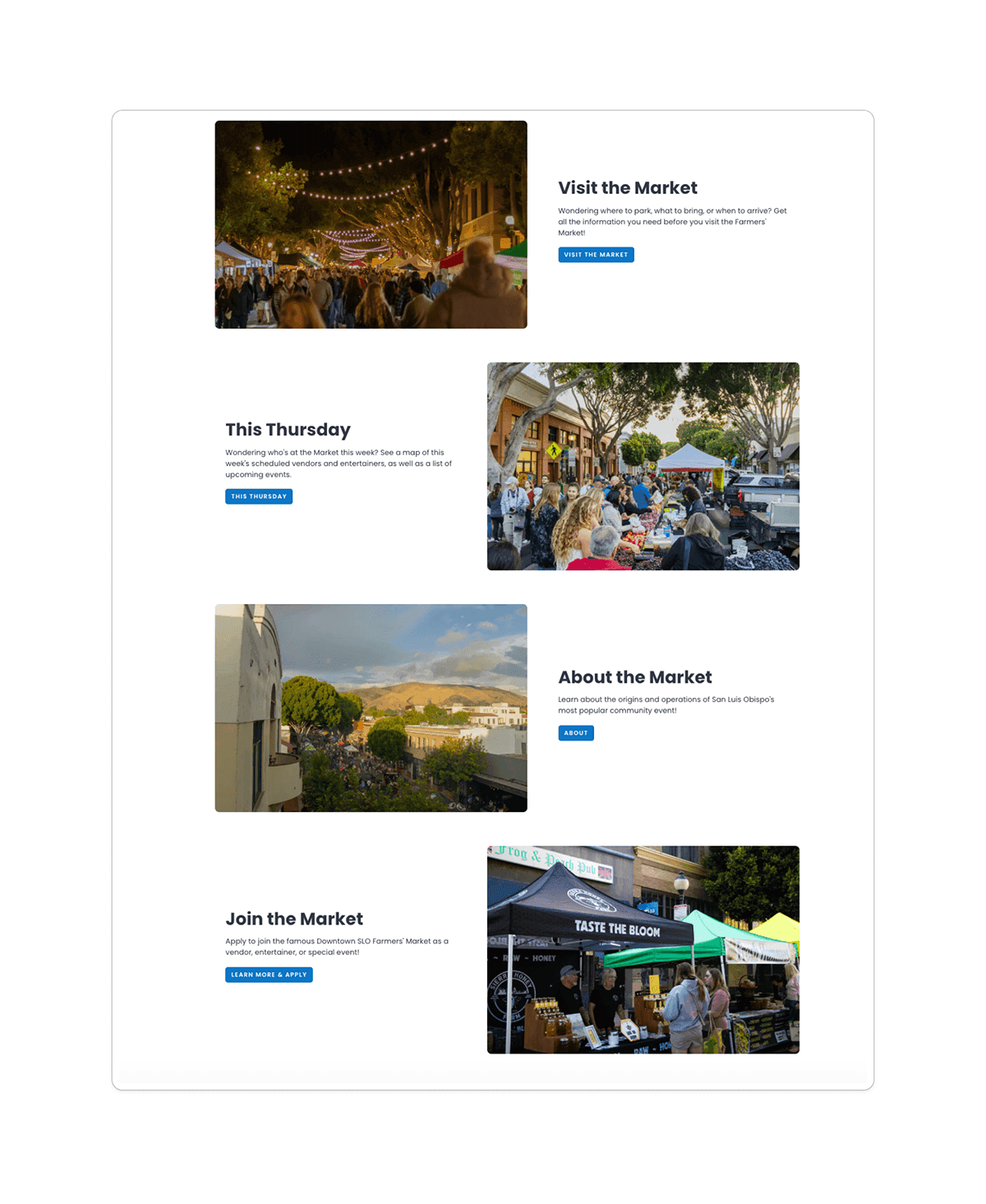
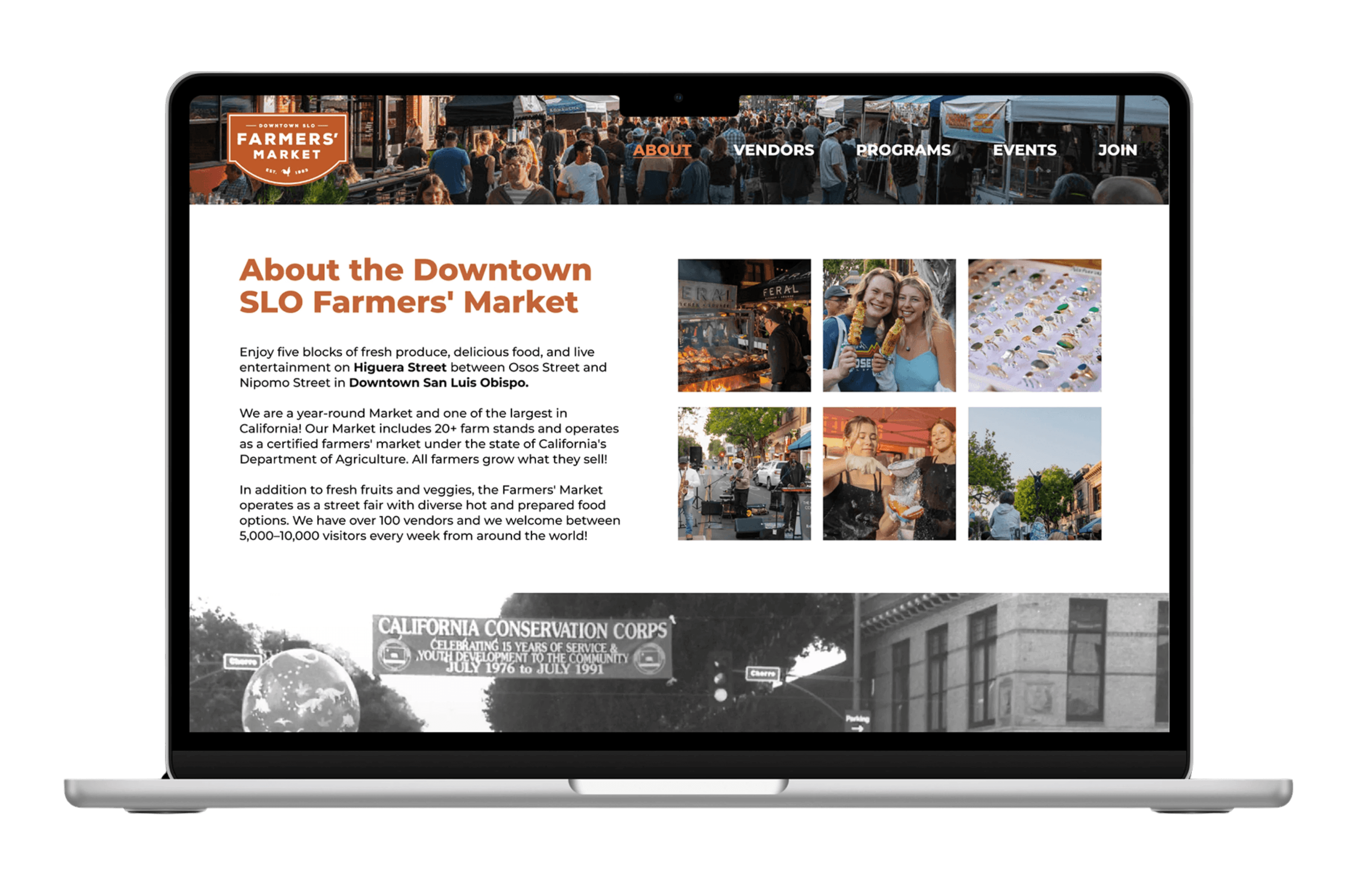
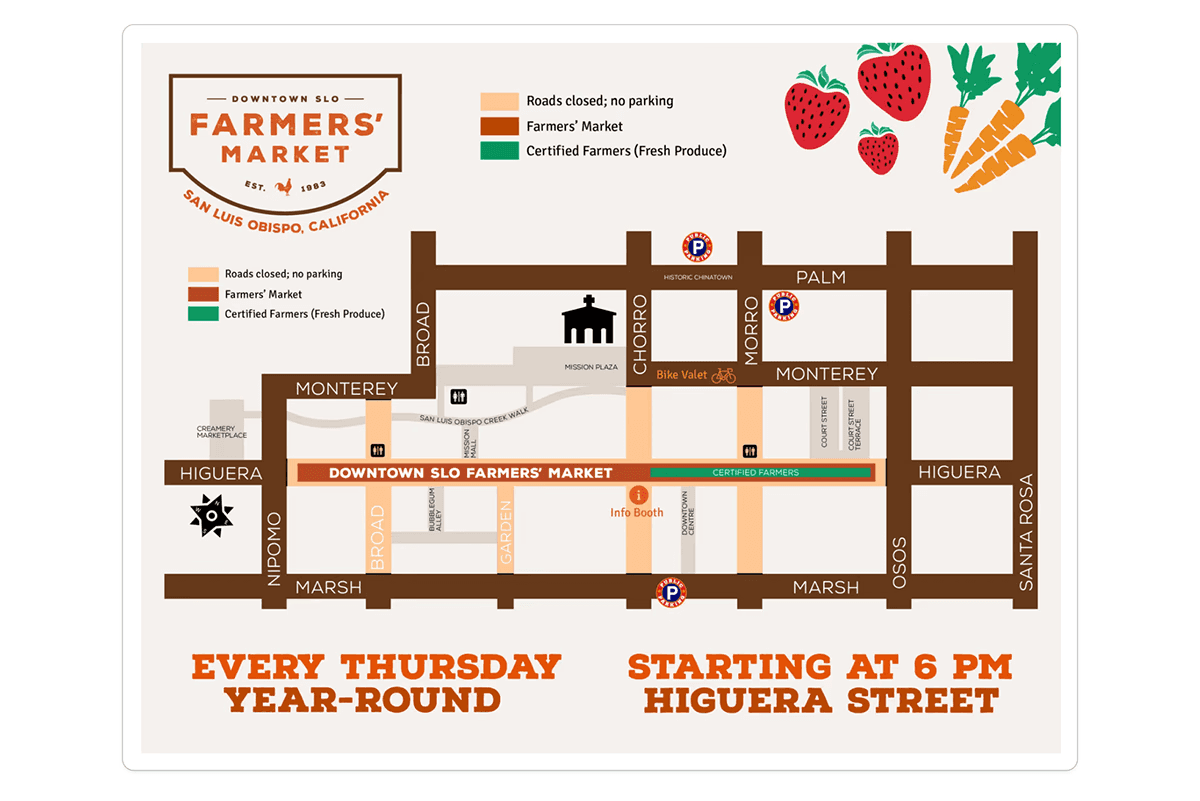
When exploring the current website for the SLO Farmers' Market, the weekly event's information exists as a separate page within the Downtown SLO website, with an entirely different brand presence and style guide. The current state of the website requires users multiple clicks to find necessary information, there's visible difficulty in legibility, text hierarchy, and an overall usage of real estate on the home page.
2. Establishing a Clear Style Guide
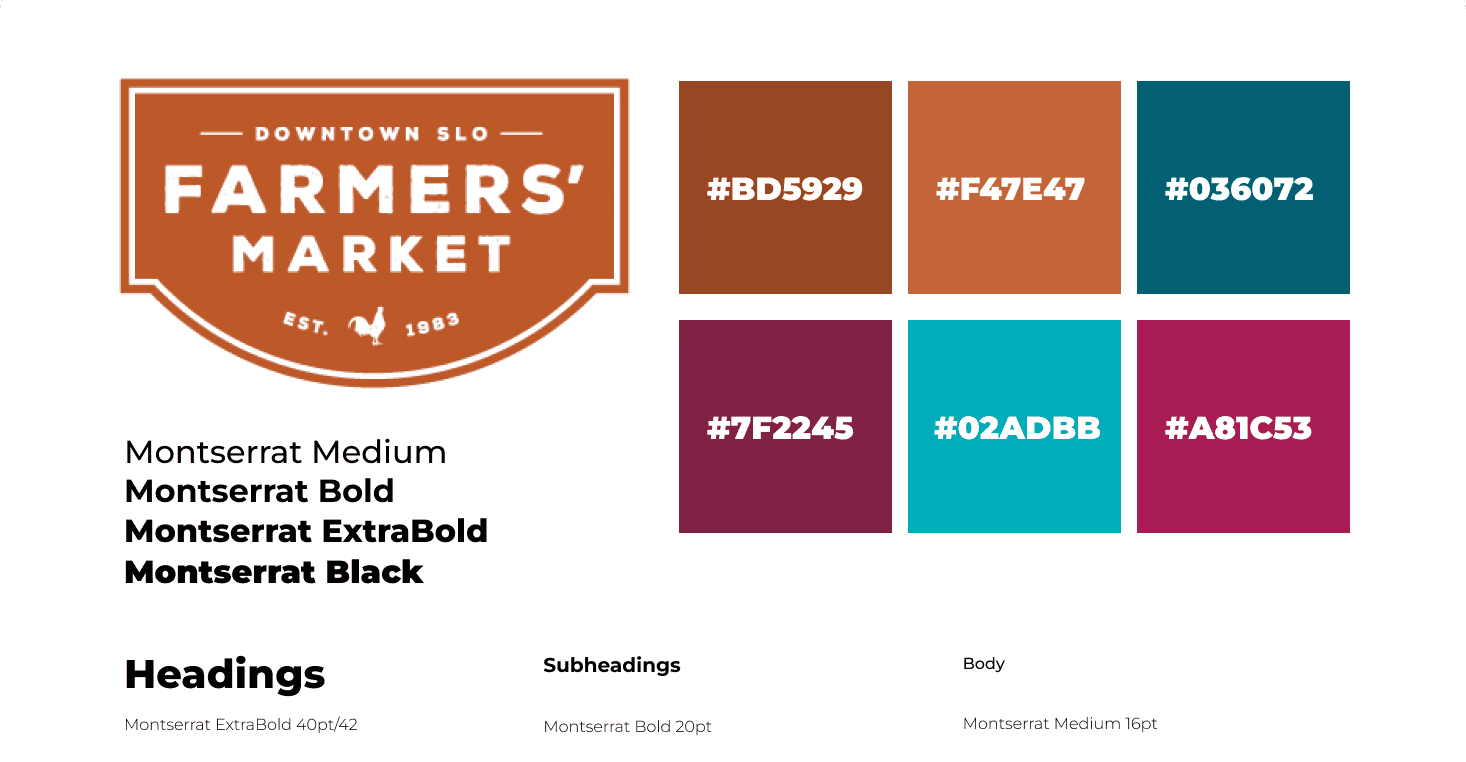
After researching the style guide through the SLO County guidelines and current assets, this helped establish a direction in which the standalone website should look, especially maintaining the brand identity already consistent through the existing style guide. Keeping warmer tones, using bold uppercase typeface, and maintaining the presence of the Farmers' Market logo were all imperative in maintaining the iconic event's aesthetic during the entire redesign.
3. Research
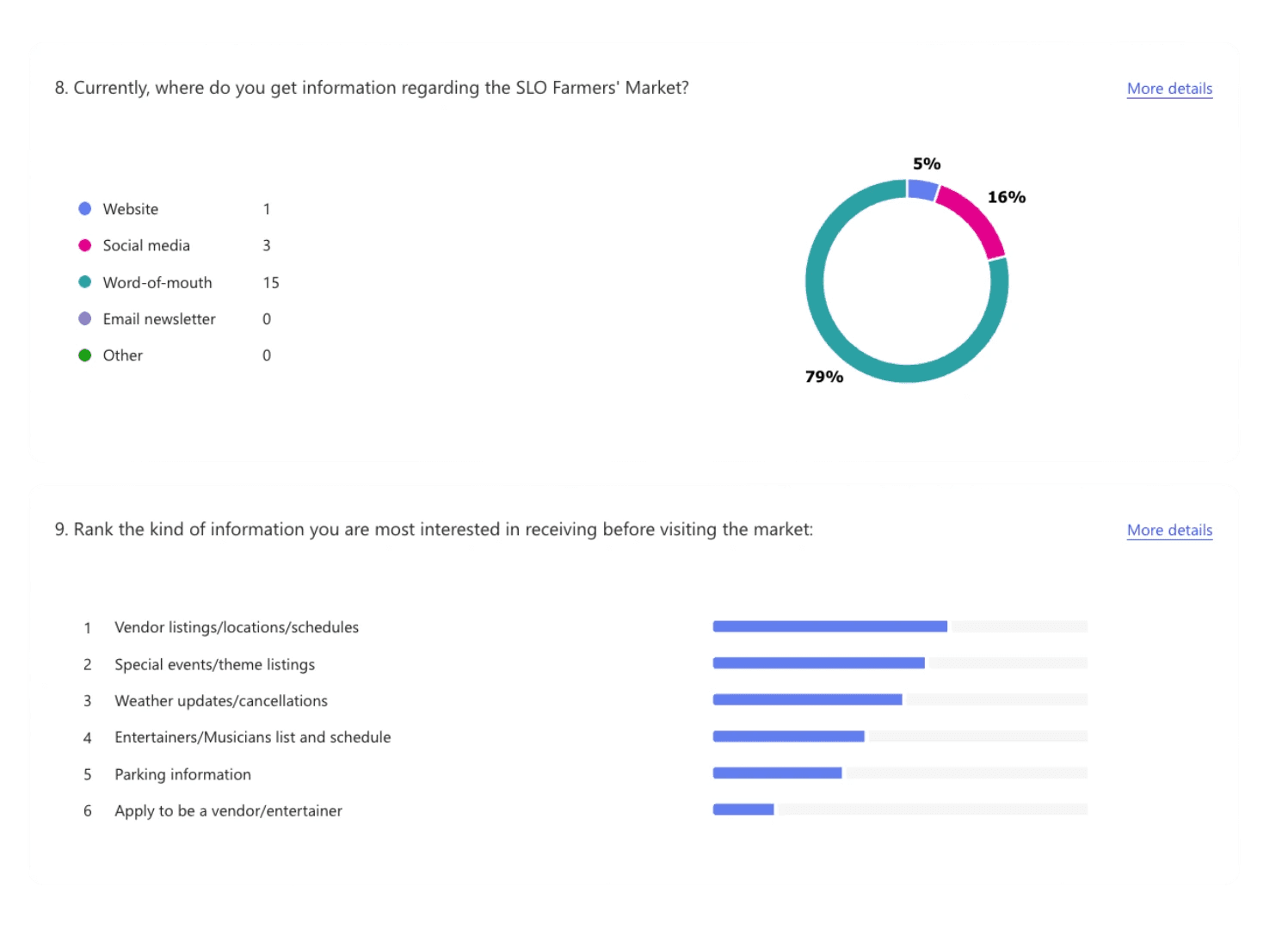
After conducting a research survey, respondents value knowing vendor listings, locations, schedules, special events, and weather updates the most. Most respondents also received updates regarding the Farmers' Market not from the website, but from word-of-mouth instead.
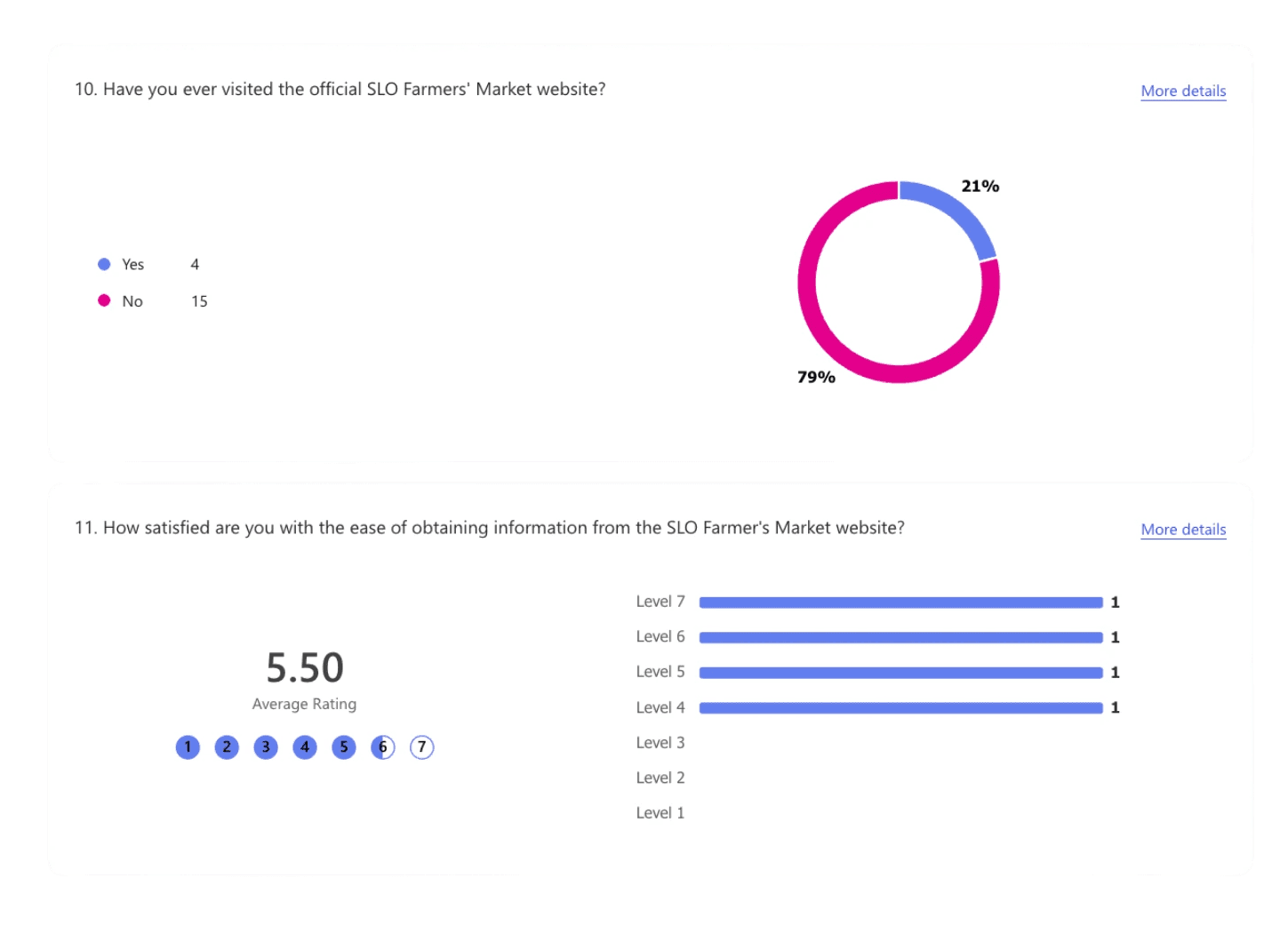
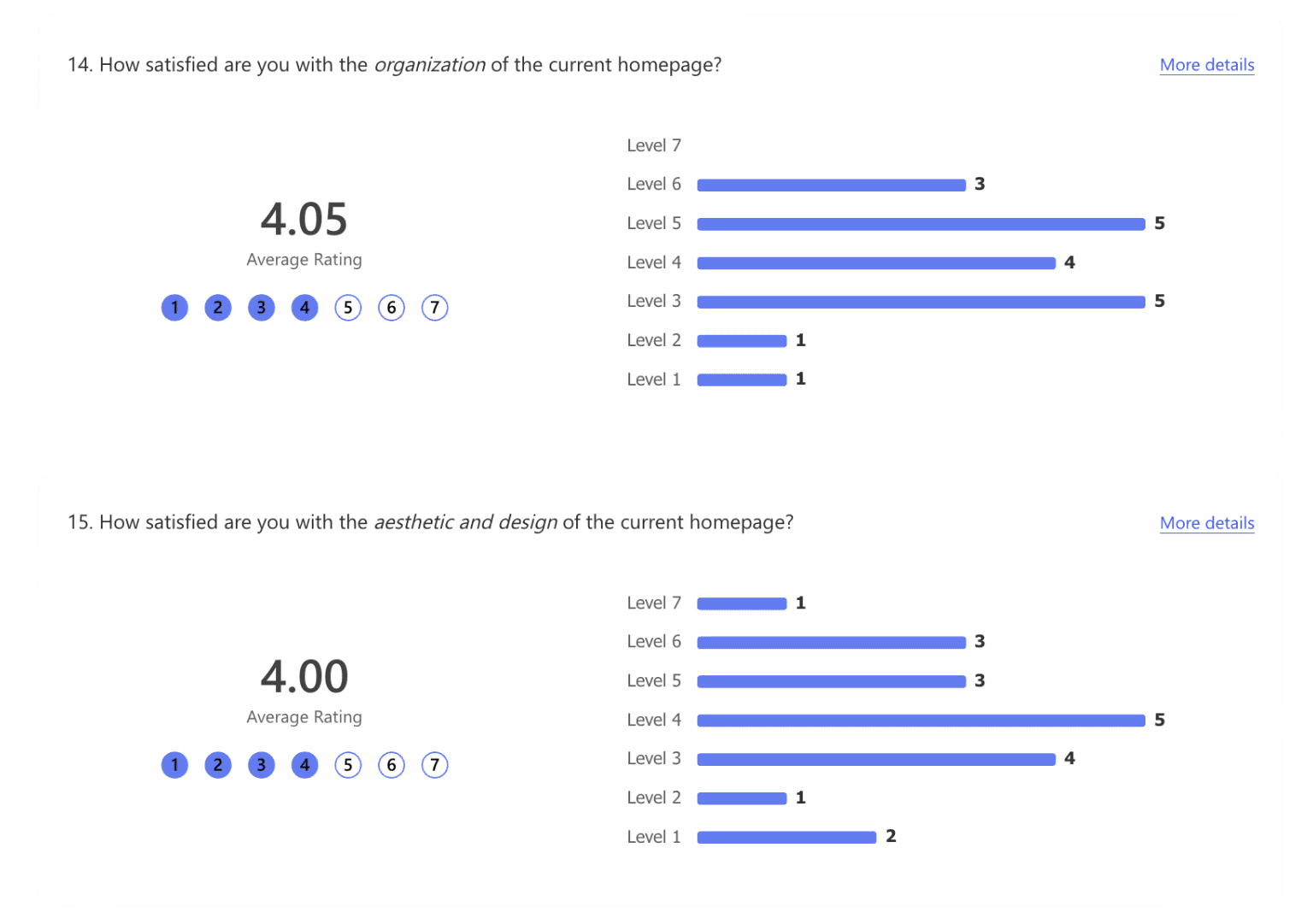
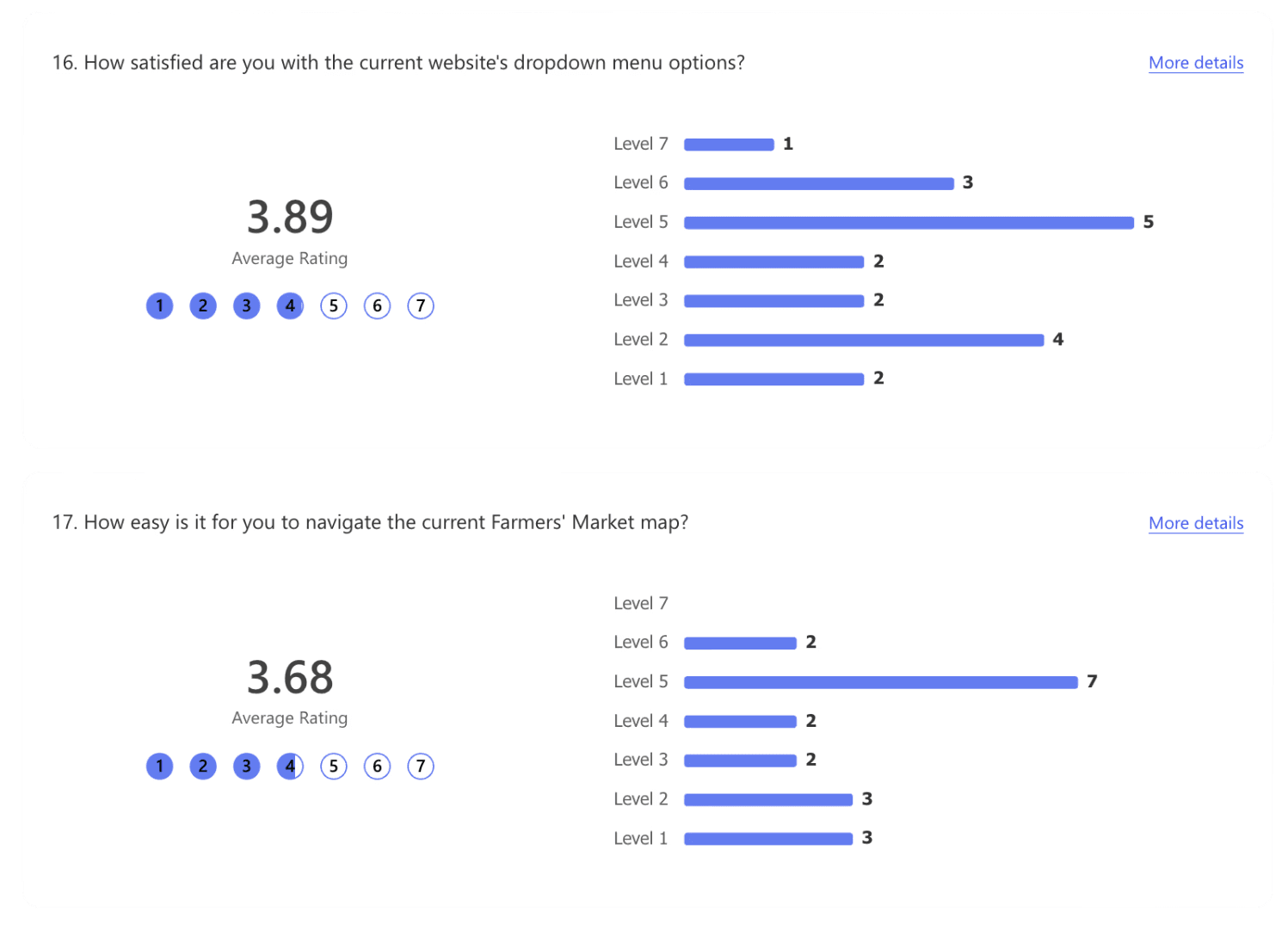
The current aesthetic and design of the homepage scored a 4/7, indicated room for improvement. Additionally, respondents were not satisfied with the current website’s menu dropdown (3.89/7). Overall, respondents found it challenging to navigate the current map of the Farmer’s Market.
Segmented Personas
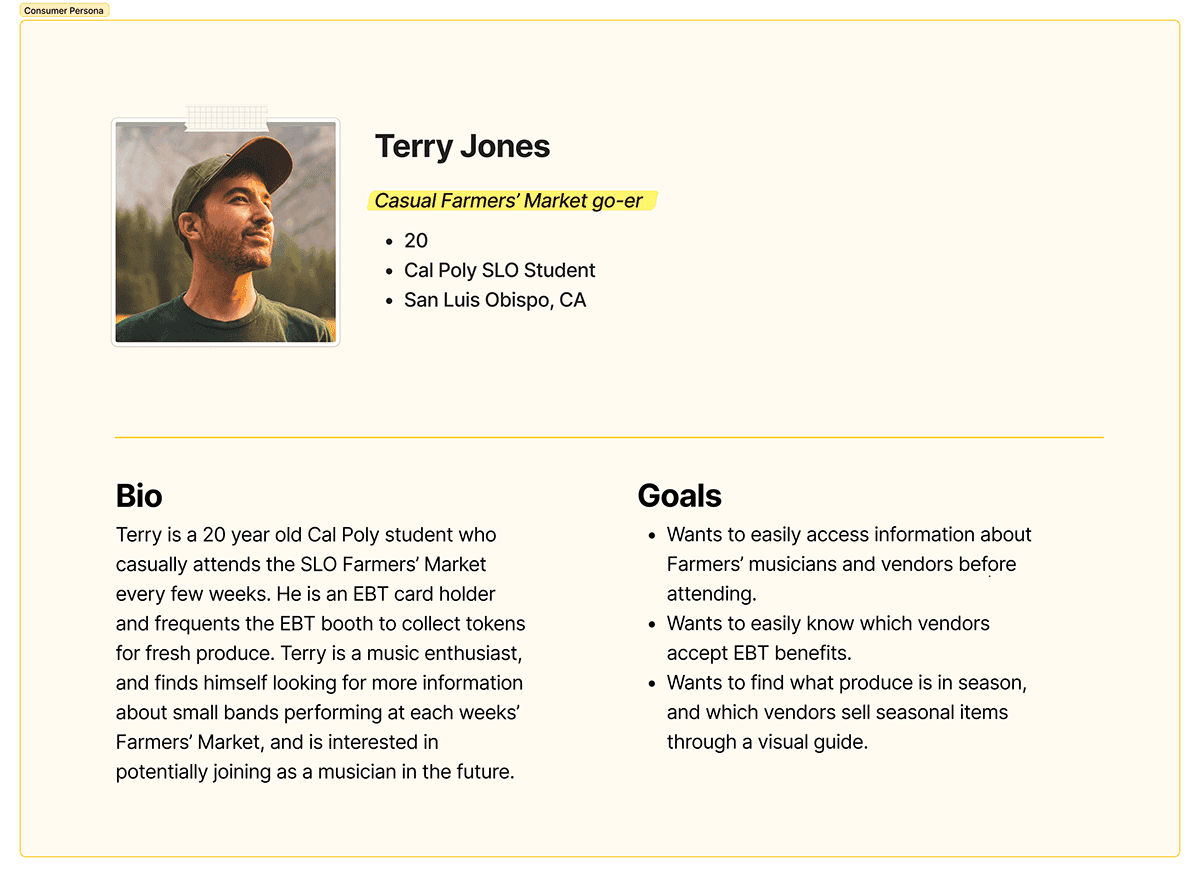
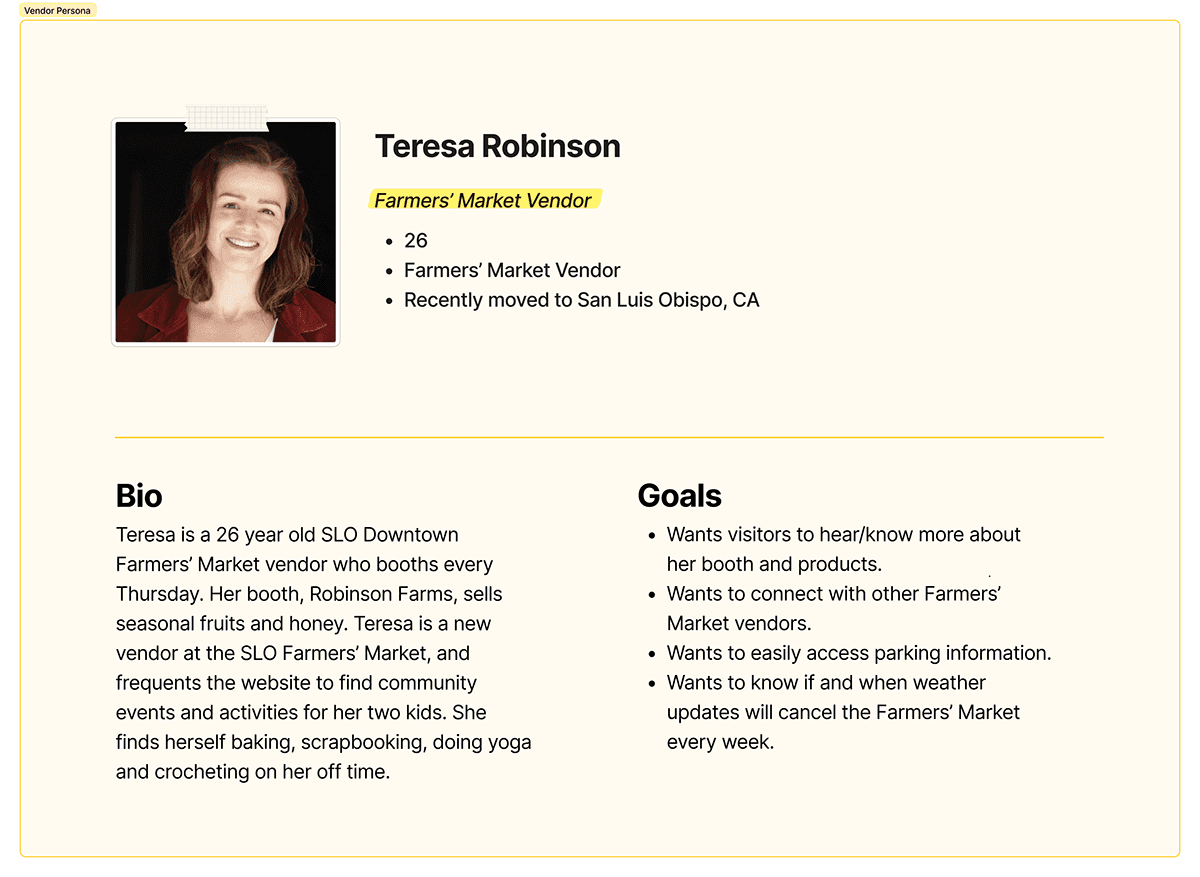
It was important to address both sectors of our research respondents, which included both Farmers' Market attendees and vendors. After analyzing the results of the user research, I created two segmented personas to help characterize our target audience, demographic, interests and pain points, and their most important needs out of a standalone SLO Farmers' Market website.
Crazy 8 Sketches & Information Architecture
Establishing segmented personas allowed myself and my teammates to sketch out Crazy 8's, including designs for a clearer homepage, possible vendor pages, critical components that must be included within each page, and fleshing out how to strategically use the real estate of a website's home page.
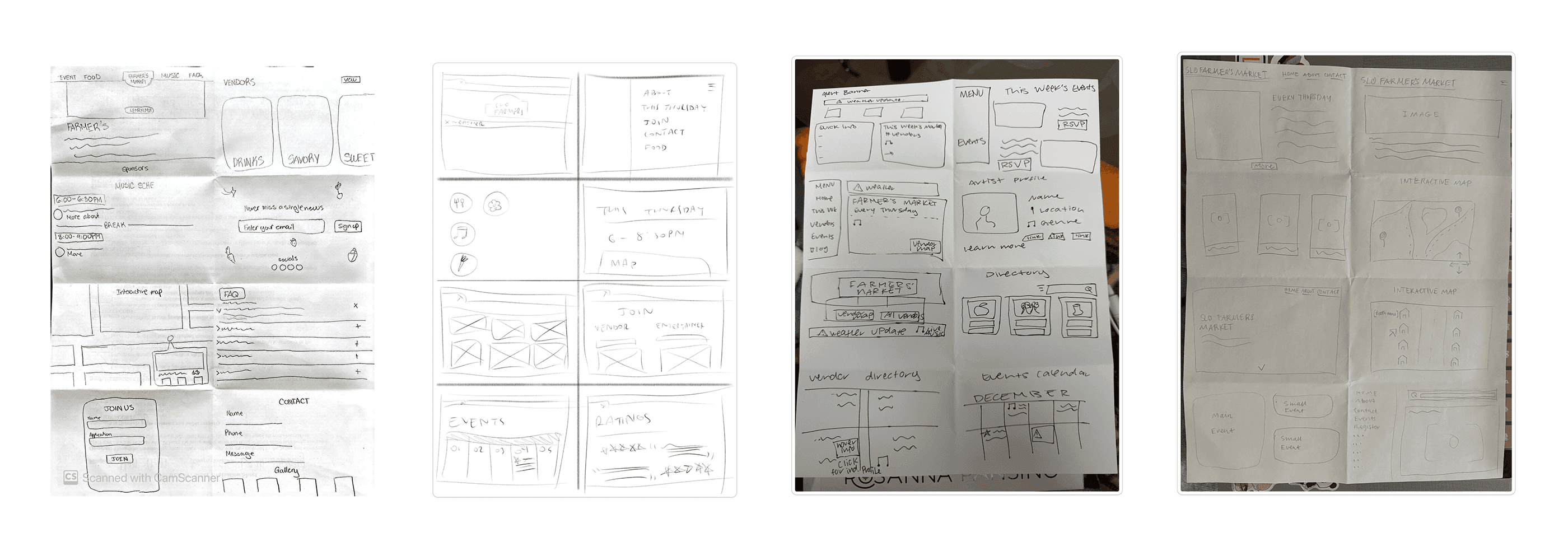
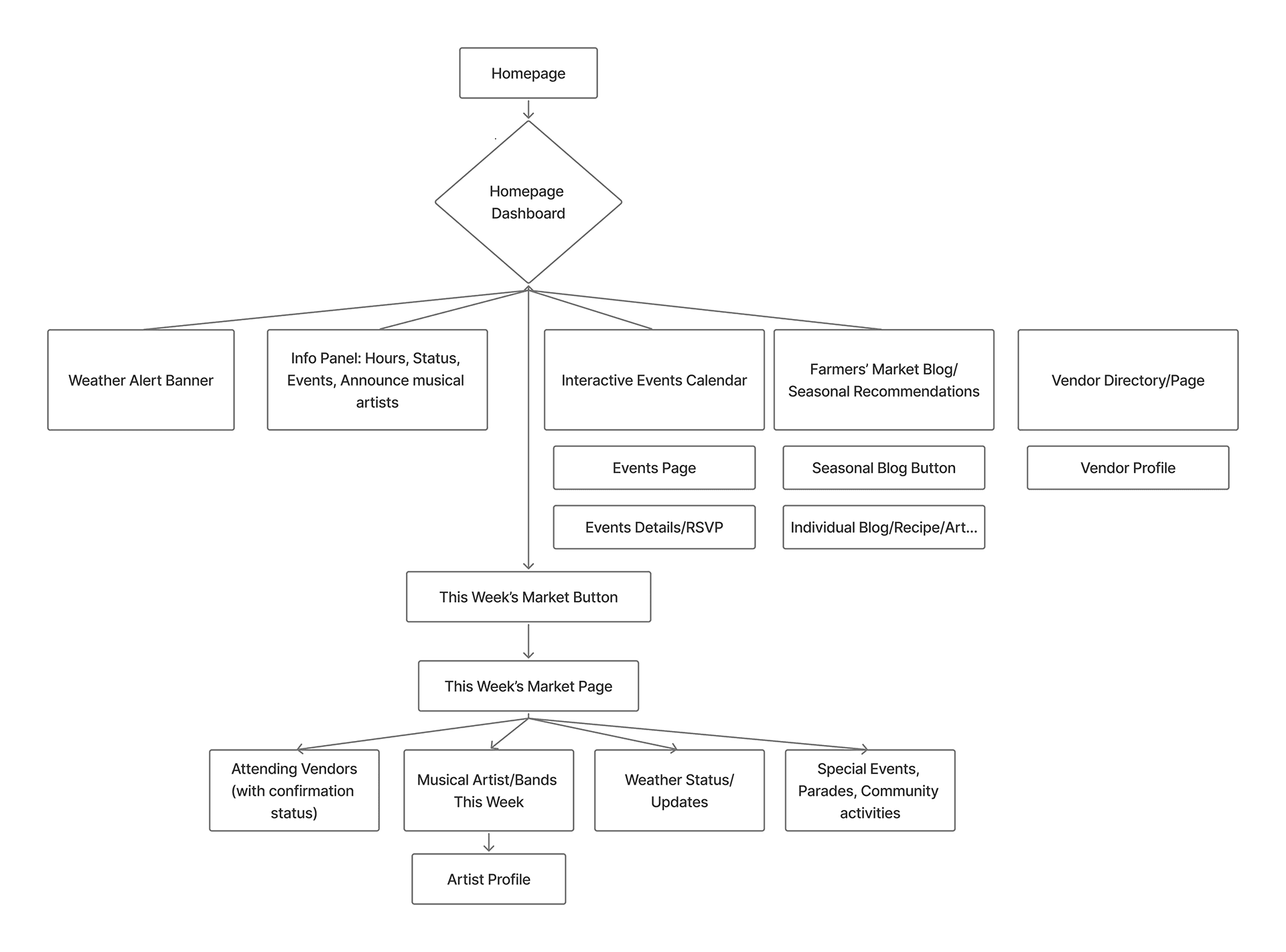
After voting on the most important components of our collective Crazy 8 sketches, we developed the website's user flow, with pages including an interactive events calendar, a seasonal blog, a banner including possible weather updates, and a directory for all users, attendees or vendors, to access all vendors that partner with and will attend that week's Farmers' Market.
Low-Fi Designs
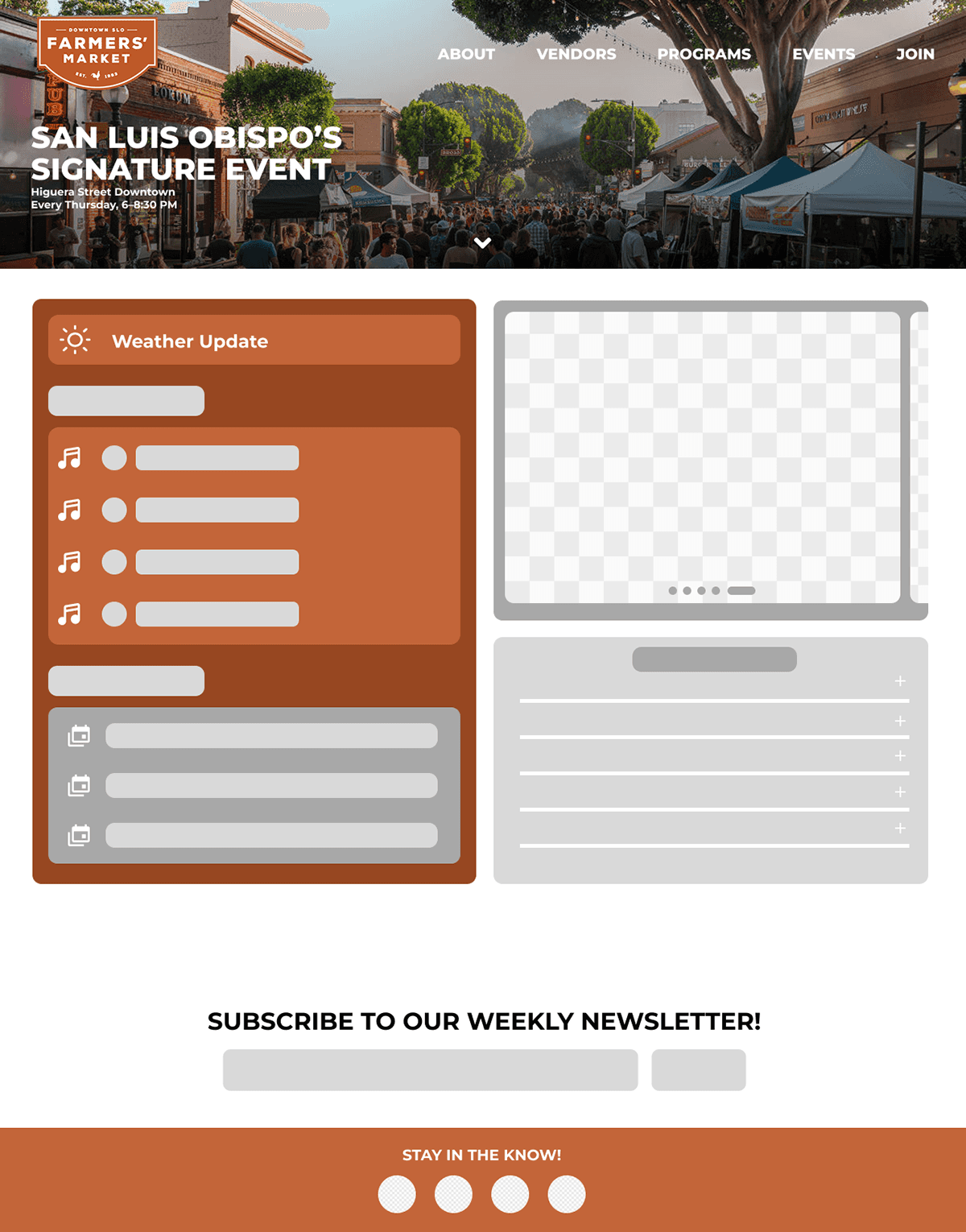
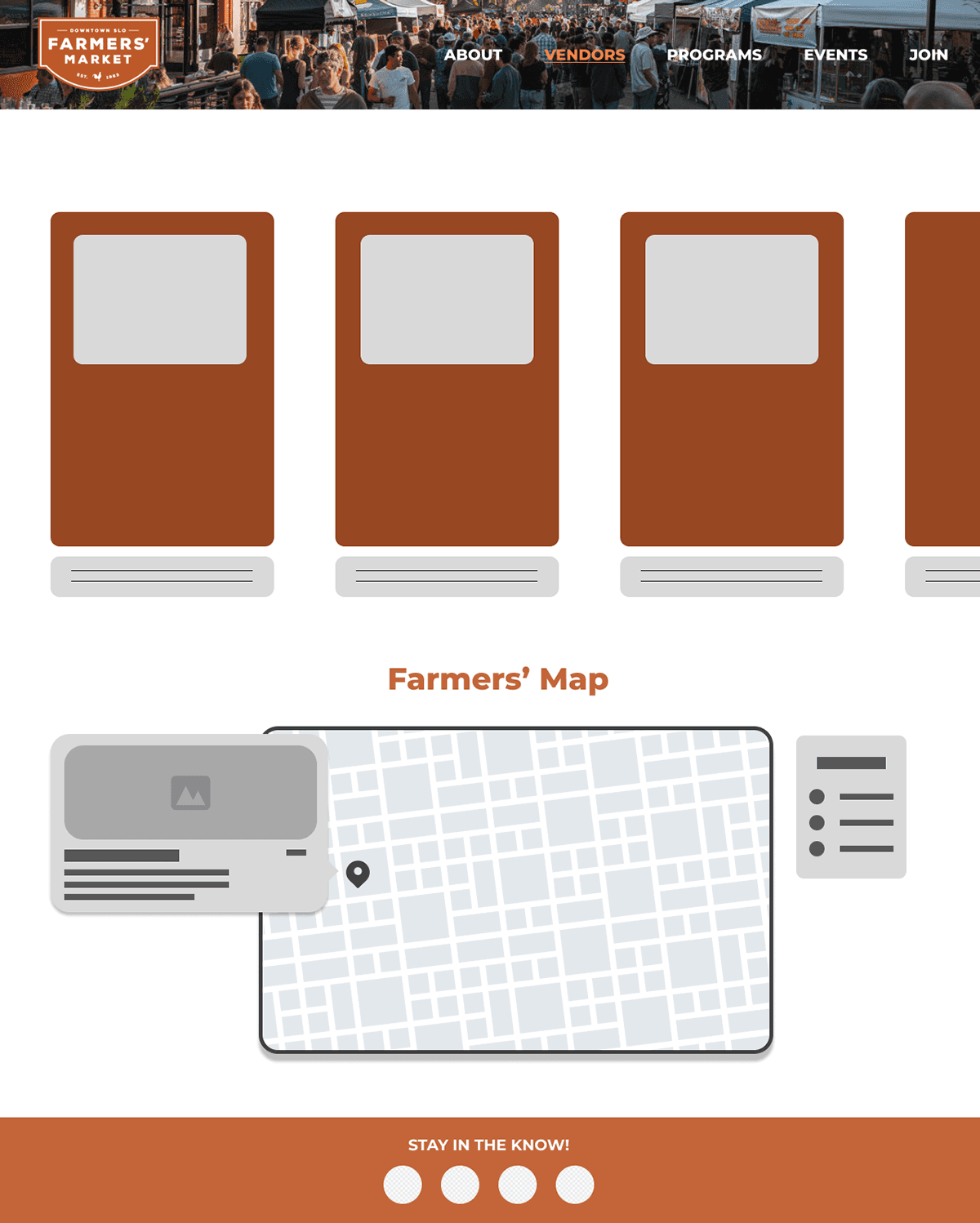
In our low-fidelity designs, we established clear brand presence across all pages, so the existing logo looks cohesive with the rest of the components. The home page includes a weather app card and an hourly schedule of live music artists and events occurring for each week's Farmers' Market, addressing the research takeaway to prioritize weekly schedules. On the vendors page, seller cards were created in addition to an improved Farmers' Map, with hover effects that display more information about the vendor.
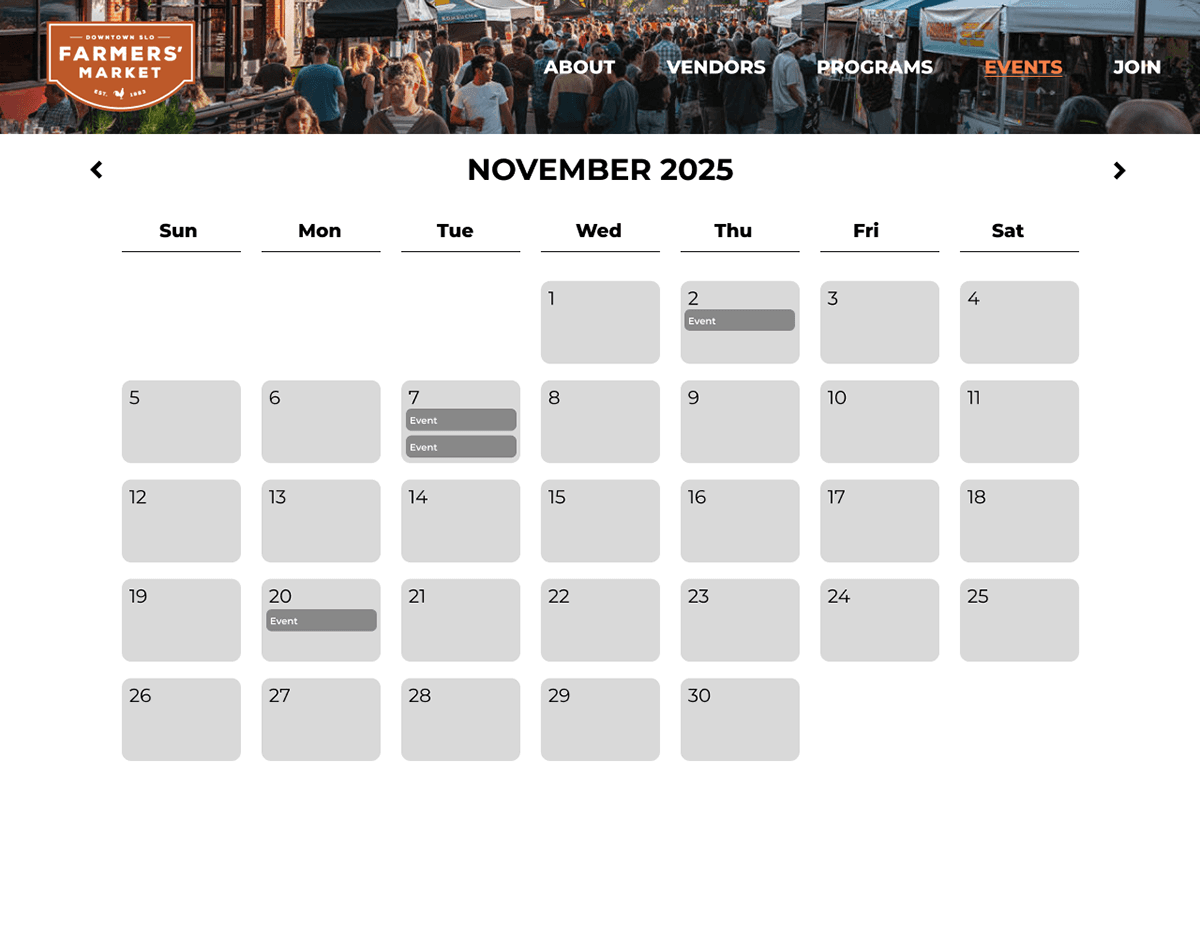
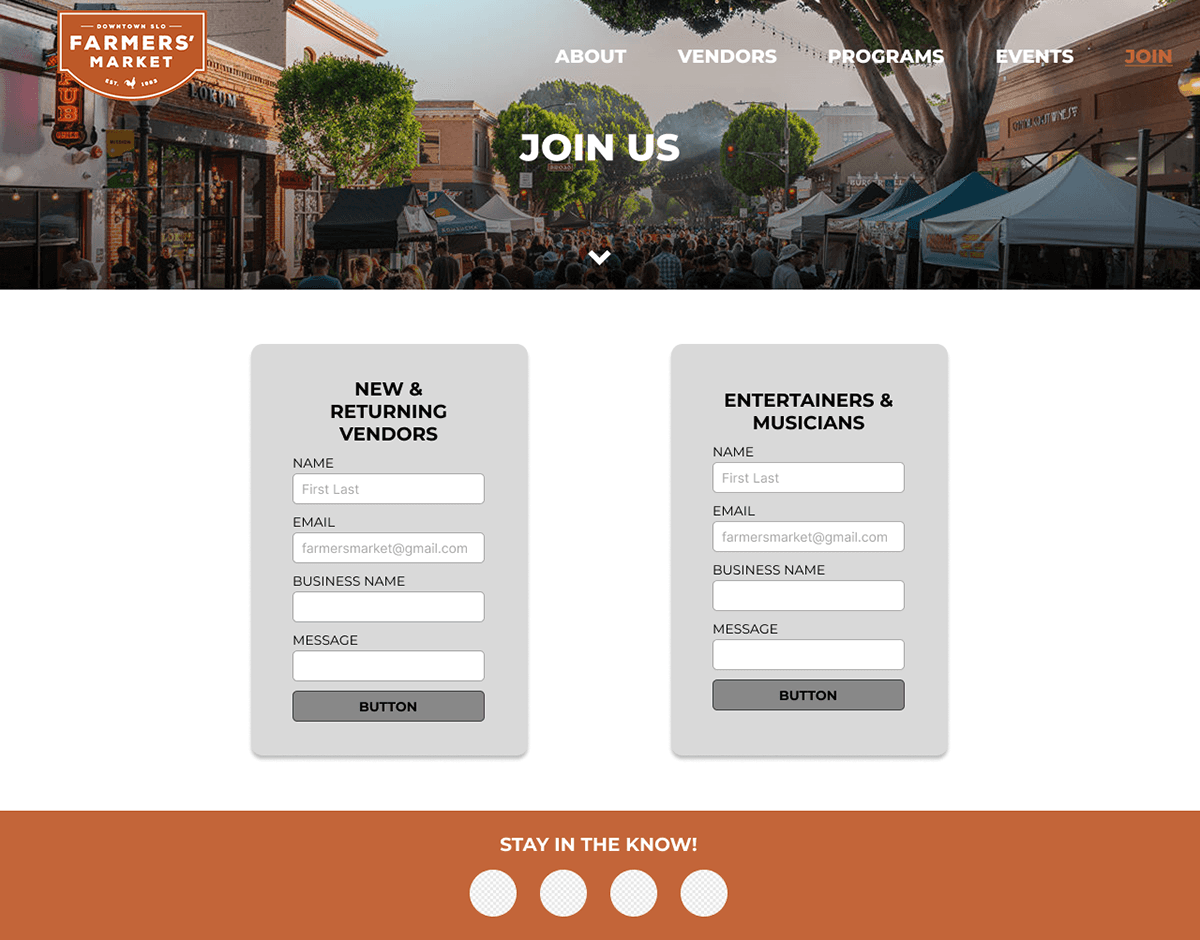
Lastly, our Events and Join page were created to address the navigability and information organization of the previous website, establishing ease for both attendees and vendors to access either monthly events to plan their attendance in advance, or even musicians to join the Farmers' Market to promote their talent through the market as well.
Reflection
This case study was great practice to work in time-constrained conditions and deadlines while working in a team with diverse creative backgrounds and skills. I used this time to polish my Figma component and auto layout skills, and start using FigJam as an amazing brainstorming and team organizing tool for any project, even of my own. Something I want to include as a stretch goal for myself is to Crazy 8 some sketches in mobile specs, as most users access their information regarding Farmers' Market from their phones, not desktop. This can help me design for multiple device capabilities and screen adaptability. Overall this was a fun, yet immensely formative project to experience that helped me get to where I am creatively today.